Larissa Sissu
Larissa Sissu
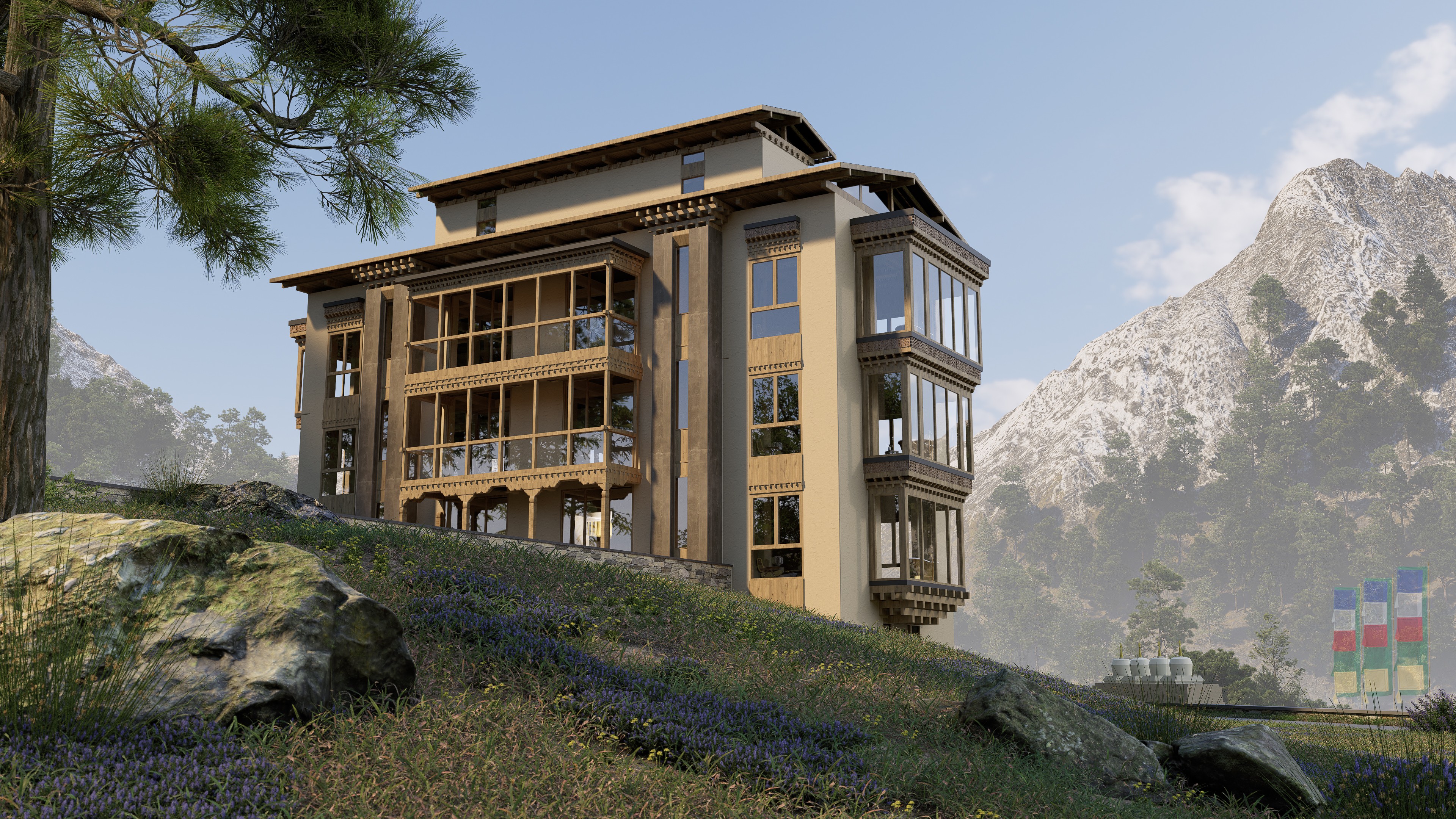
Set at the threshold where Manali’s green slopes give way to Lahaul’s stark high-altitude desert, Larisa Sissu blends vernacular stone-and-timber architecture with refined, minimal form. Its two-block composition allows the hotel to sit gently within the mountains while opening every room to the dramatic valley and peak views.
Set at the threshold where Manali’s green slopes give way to Lahaul’s stark high-altitude desert, Larisa Sissu blends vernacular stone-and-timber architecture with refined, minimal form. Its two-block composition allows the hotel to sit gently within the mountains while opening every room to the dramatic valley and peak views.
Location
Sissu
Visualization
Ebin Abraham Raj
Category
Architecture
Year
2025
Larisa Sissu is a 10,000 sq ft boutique hotel located in the village of Sissu, Lahaul — a rare threshold where the lush, rain-fed slopes of Manali give way to the stark, high-altitude desert of Lahaul-Spiti. Positioned just north of the Manali–Leh highway, the site sits within a fertile valley framed by the glinting Chenab River and dramatic snow-capped peaks.
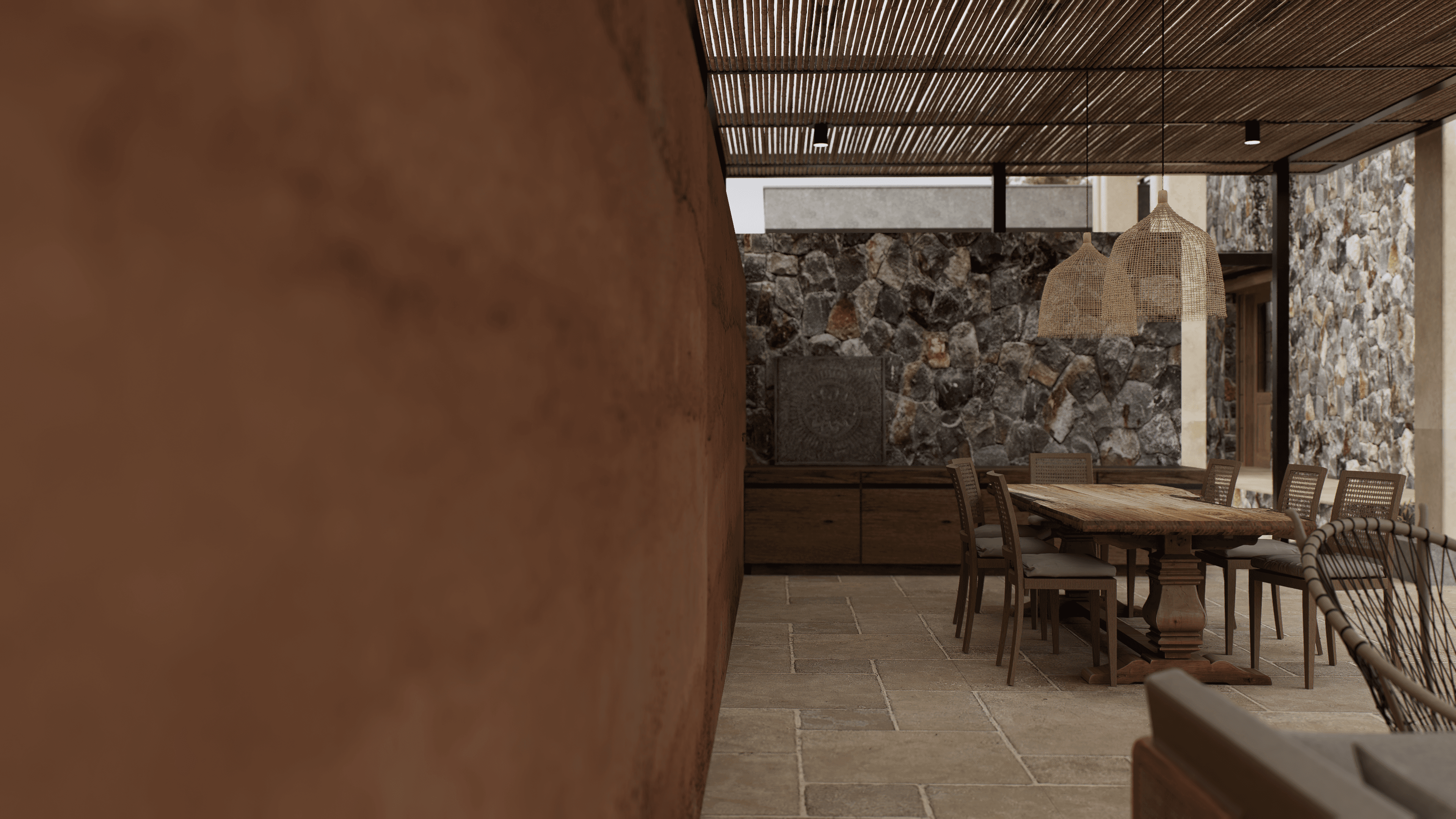
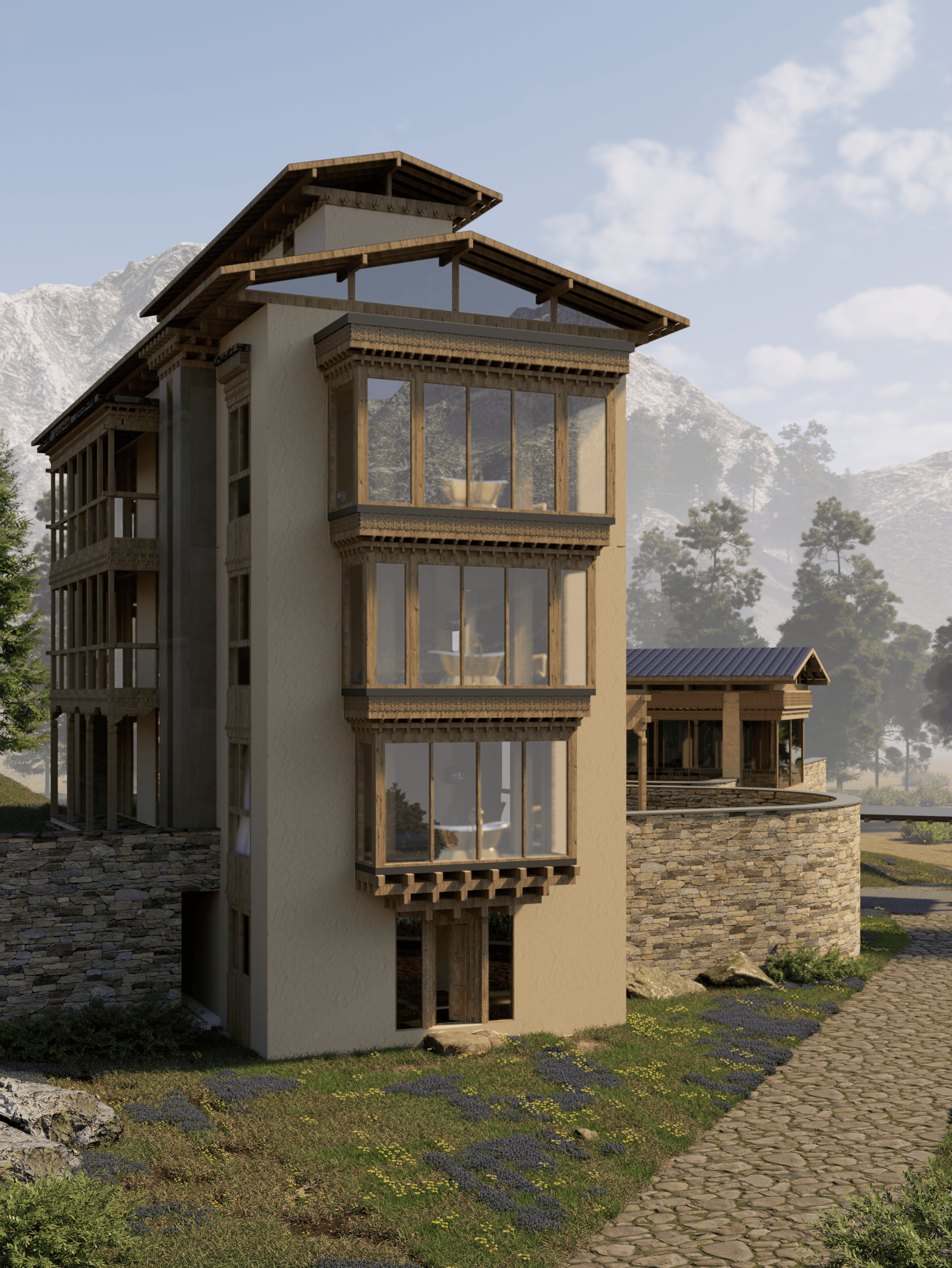
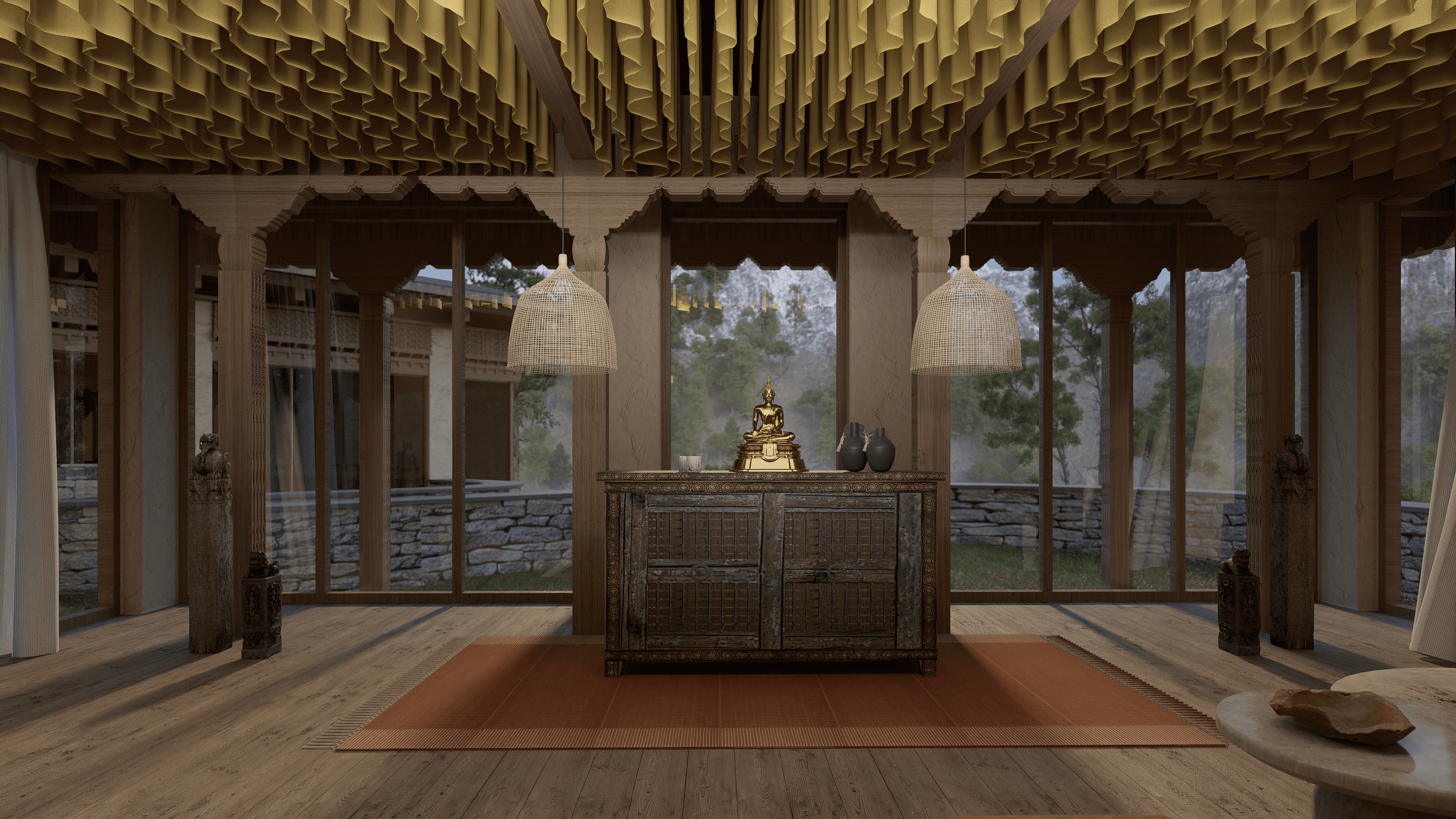
The architecture draws from traditional Lahauli and Tibetan building practices — thick stone walls, timber bands, and earthen textures — distilled into a clean, minimal contemporary expression. To respect the pristine landscape and avoid visual bulk, the project is split into two smaller blocks, reducing its footprint and allowing the built mass to settle gently into the mountainscape.
Larisa Sissu is a 10,000 sq ft boutique hotel located in the village of Sissu, Lahaul — a rare threshold where the lush, rain-fed slopes of Manali give way to the stark, high-altitude desert of Lahaul-Spiti. Positioned just north of the Manali–Leh highway, the site sits within a fertile valley framed by the glinting Chenab River and dramatic snow-capped peaks.
The architecture draws from traditional Lahauli and Tibetan building practices — thick stone walls, timber bands, and earthen textures — distilled into a clean, minimal contemporary expression. To respect the pristine landscape and avoid visual bulk, the project is split into two smaller blocks, reducing its footprint and allowing the built mass to settle gently into the mountainscape.
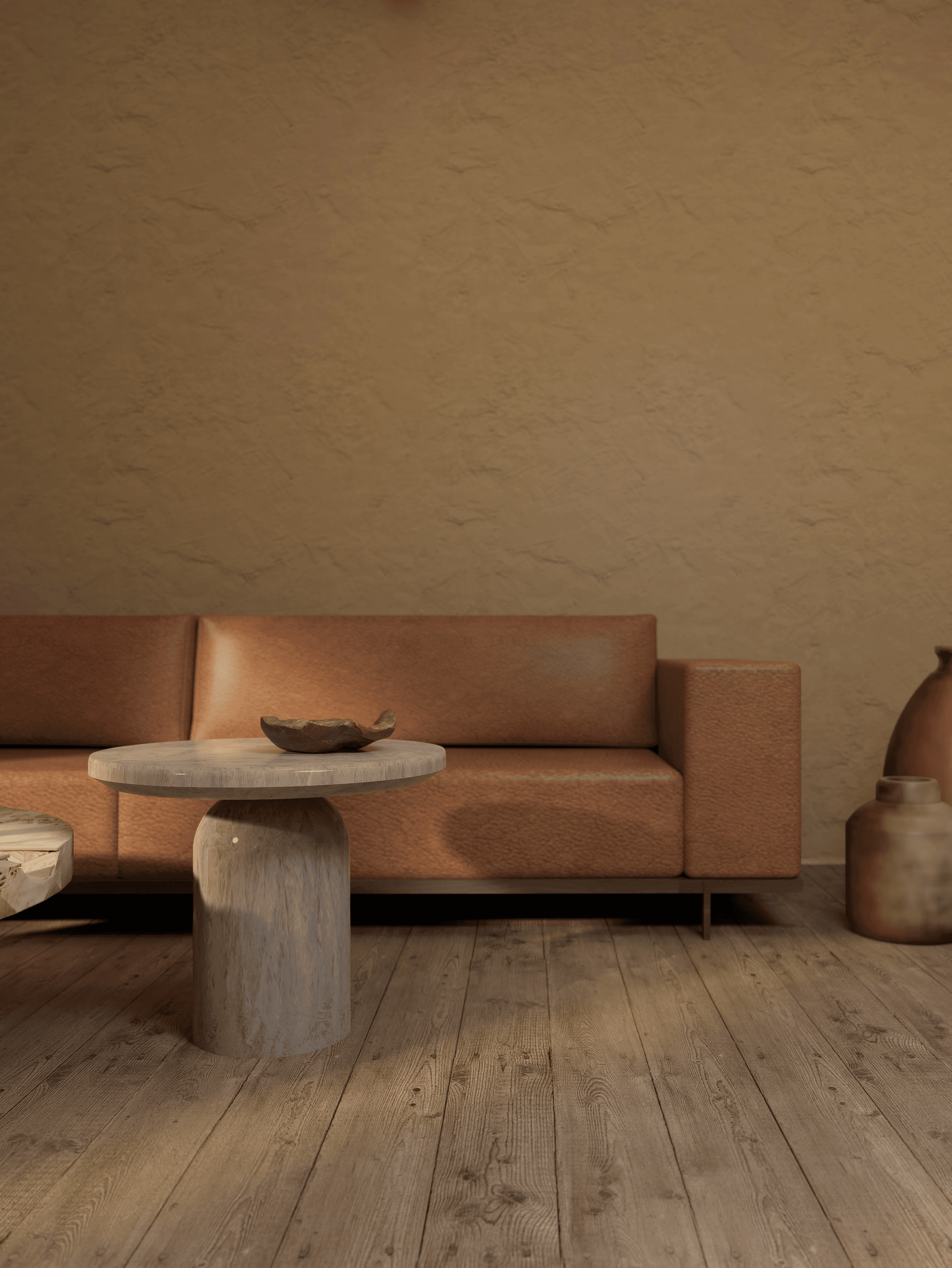
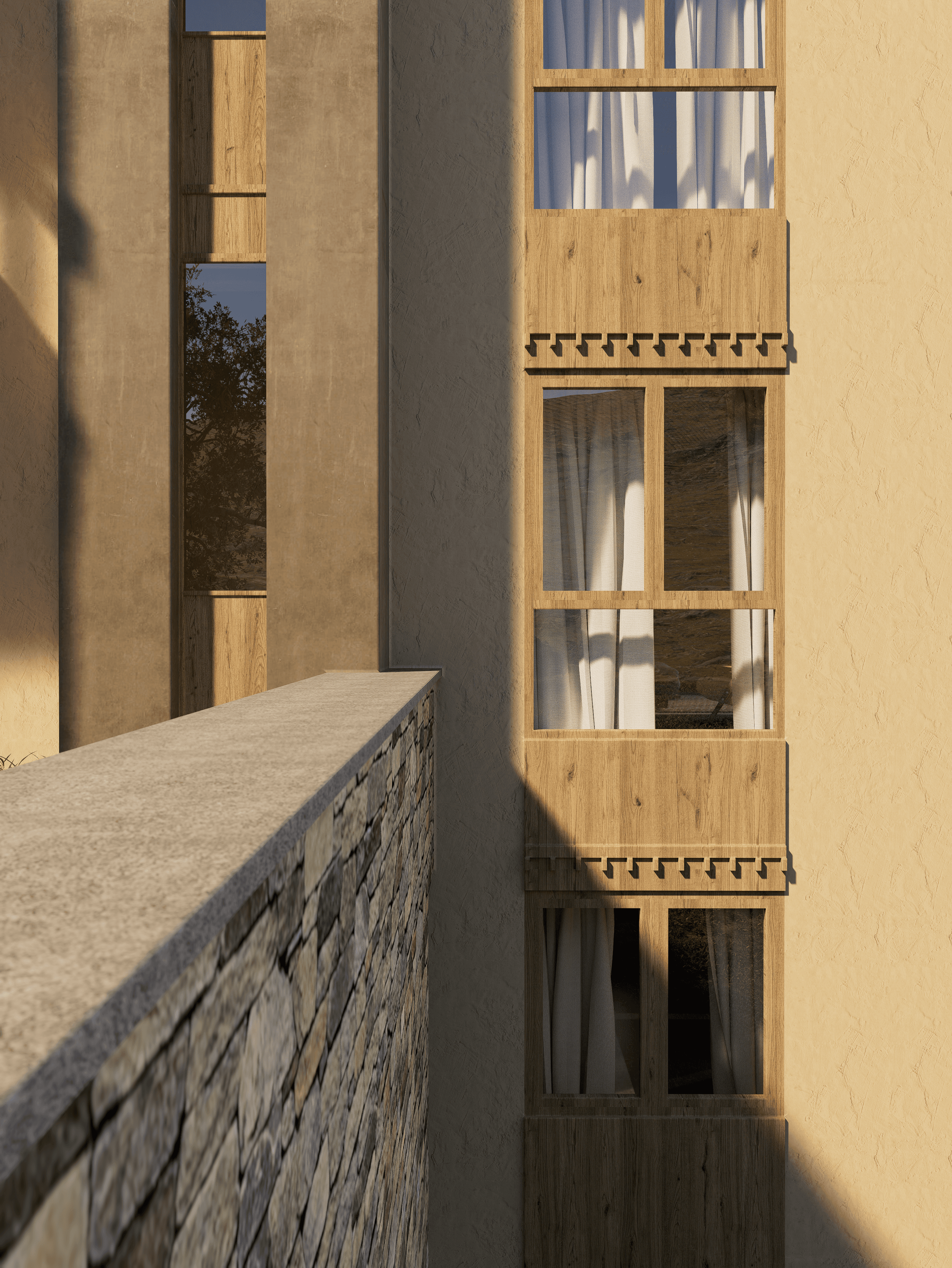


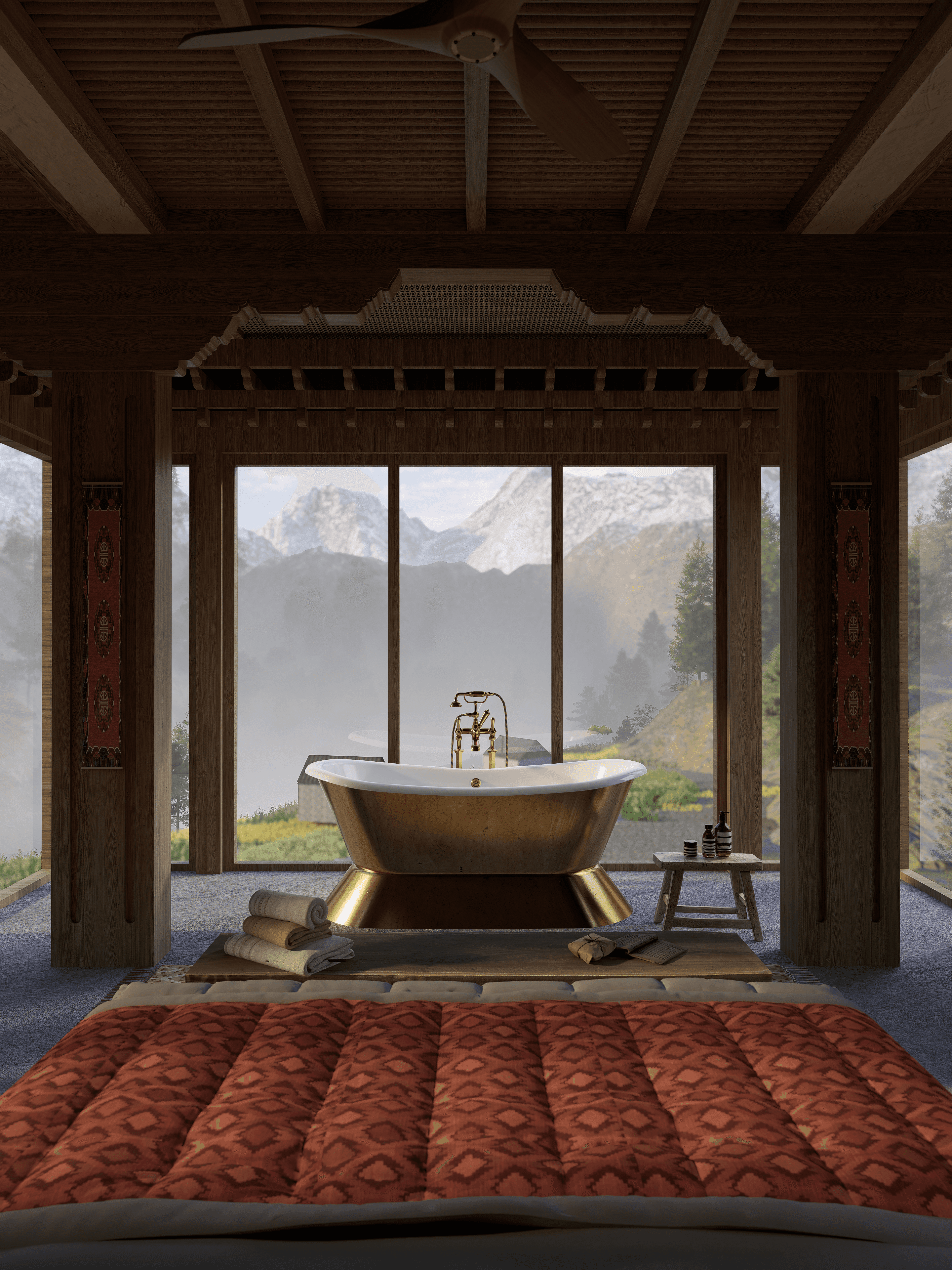
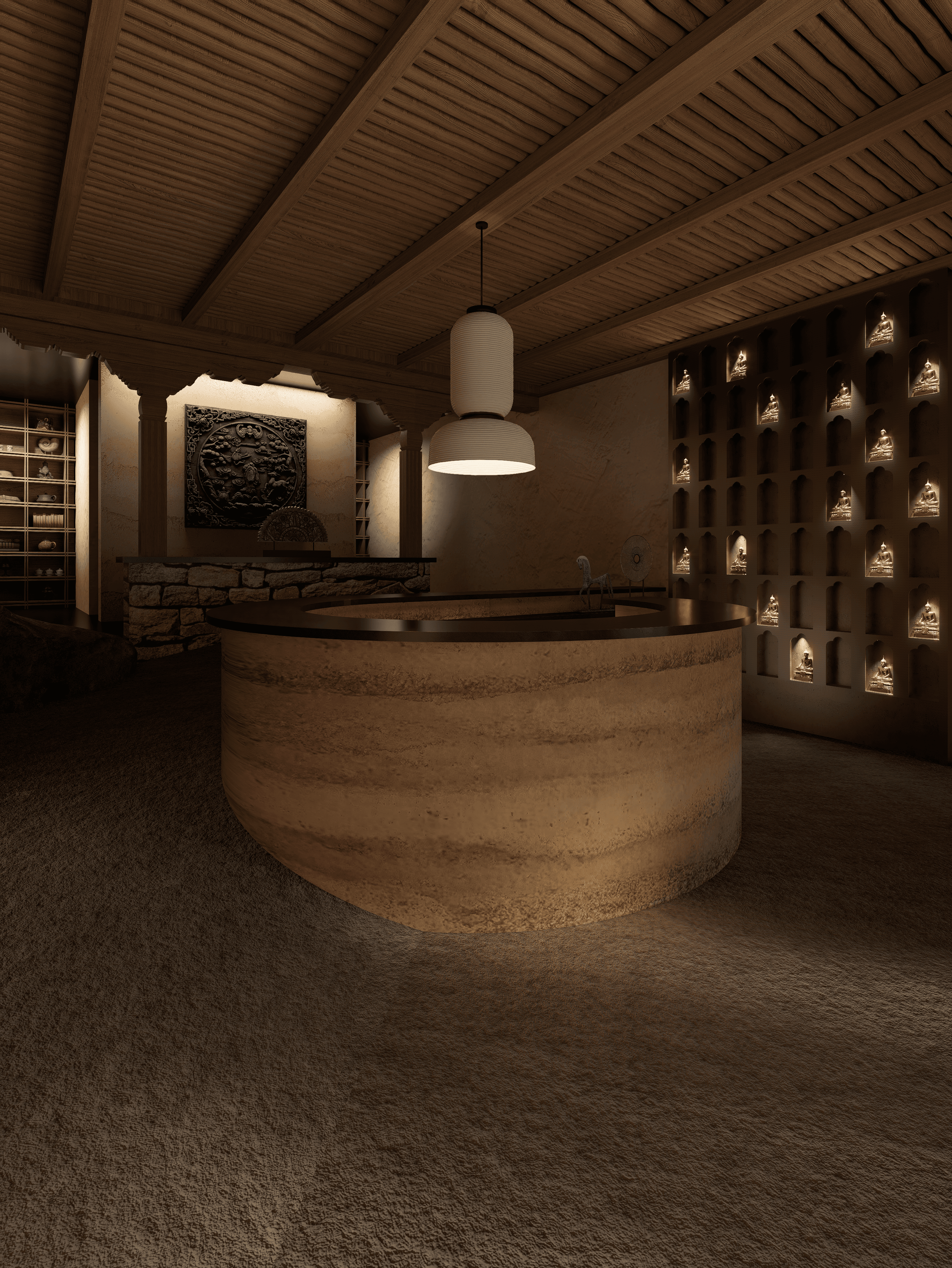
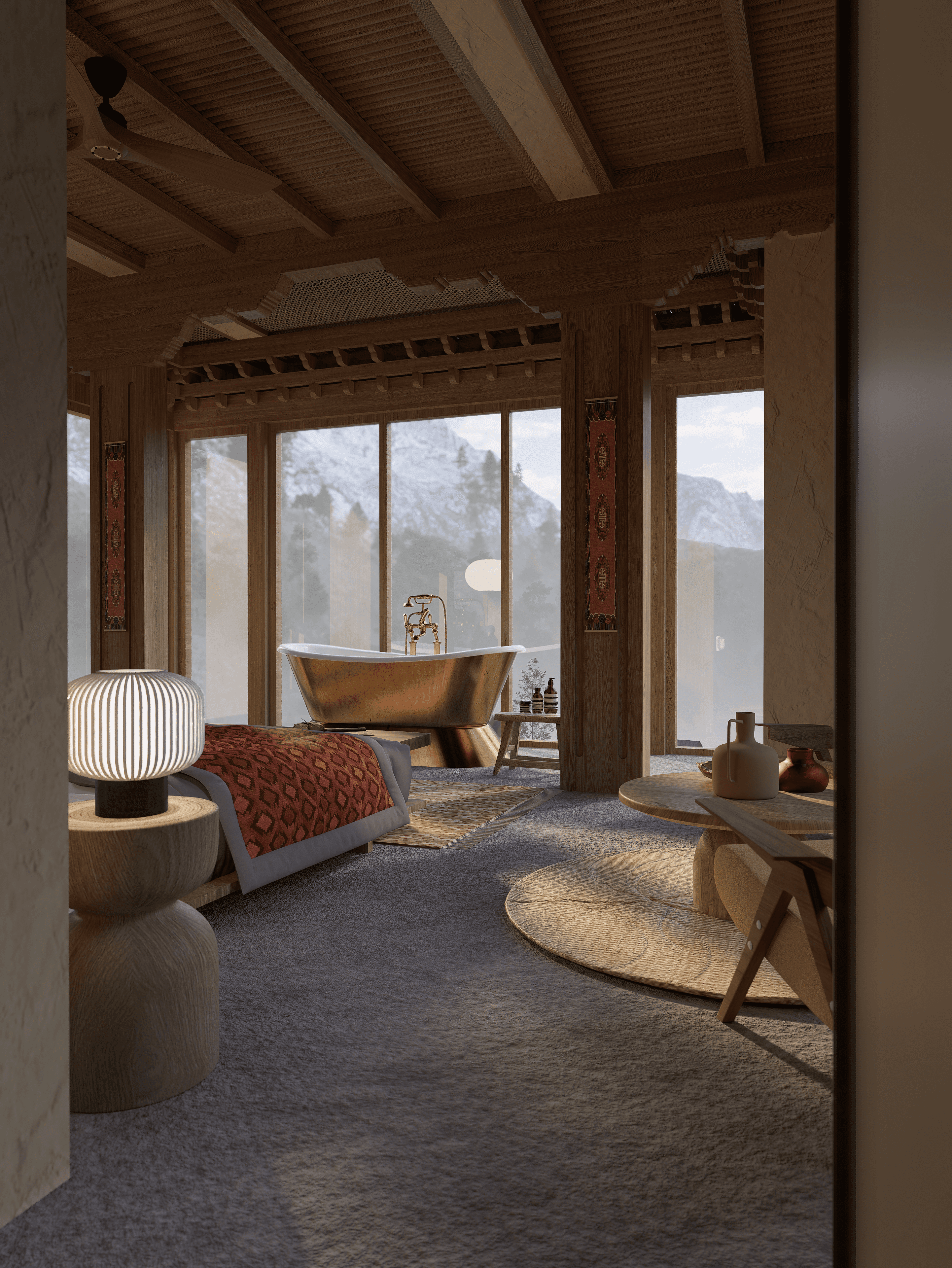
The east block houses the reception, administrative functions, and a restaurant that opens onto a southeast-facing lawn designed to capture maximum warmth and light. The west block, which is taller, contains eight guestrooms, all oriented toward sweeping views of terraced farms, the Chenab River valley, and snow-clad Himalayan peaks.
Conceived as a warm and understated refuge for travellers entering the extreme cold-desert region beyond, Larisa Sissu acts as a gateway to the higher Himalayas. It serves as a quiet ambassador of local culture, materials, and vernacular traditions — offering contemporary comfort while remaining deeply rooted in the spirit of Lahaul.
The east block houses the reception, administrative functions, and a restaurant that opens onto a southeast-facing lawn designed to capture maximum warmth and light. The west block, which is taller, contains eight guestrooms, all oriented toward sweeping views of terraced farms, the Chenab River valley, and snow-clad Himalayan peaks.
Conceived as a warm and understated refuge for travellers entering the extreme cold-desert region beyond, Larisa Sissu acts as a gateway to the higher Himalayas. It serves as a quiet ambassador of local culture, materials, and vernacular traditions — offering contemporary comfort while remaining deeply rooted in the spirit of Lahaul.


Other projects
Other projects
Other projects